Insights
01.01.2026 | Dr Ravindhi Murphy
Not all scans are equal how to choose services for meaningful results
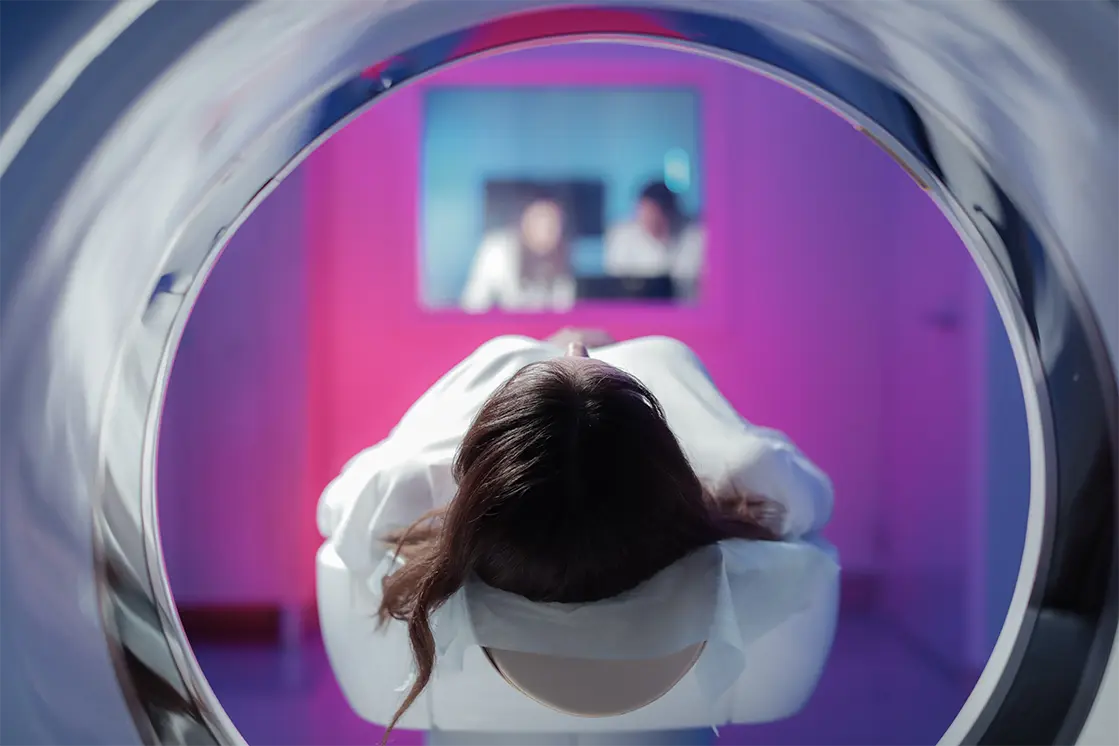
Full-body MRI scans are an increasingly visible tool in early disease detection . When used appropriately, they can help identify cancers and other conditions at earlier stages, establish a baseline for future comparison, and support informed, proactive decisions about long-term health.
One of the key advantages of MRI over other imaging techniques is that it does not use ionising radiation. This makes it particularly attractive in a screening context, where individuals are often asymptomatic and repeat imaging may be considered over time.
However, not all MRI services are equal. There is a growing number of providers offering whole-body MRI scans, and it can be difficult to distinguish meaningful clinical quality from persuasive marketing. Careful evaluation matters.
What is an MRI?
Magnetic resonance imaging (MRI) is an advanced imaging technique that uses strong magnetic fields and radio waves to create detailed images of internal structures in the body.
How MRI works
- Magnetic field: A powerful magnet aligns hydrogen atoms in the body.
- Radiofrequency pulses: These temporarily disrupt that alignment.
- Signal detection: As the atoms realign, they emit signals.
- Image reconstruction: A computer converts these signals into detailed images that are interpreted by a radiologist.
Key benefits of MRI compared with other scans
No ionising radiation
MRI avoids the radiation exposure associated with CT scans and X-rays. This is particularly important in screening, where individuals have no symptoms and the aim is risk reduction rather than urgent diagnosis.
Excellent soft tissue detail
MRI provides high-quality images of soft tissues, organs, bone marrow, and blood vessels.
Non-invasive
MRI allows comprehensive internal assessment without surgery or invasive procedures.
Potential for early detection
MRI can detect certain cancers at earlier stages, including lymphoma, myeloma, and some liver and kidney cancers, when treatment may be more effective.
MRI does not replace all other scans. In many situations, imaging that uses ionising radiation is entirely appropriate. The key is choosing the right test at the right time.
Can everyone have an MRI?
No. MRI is not suitable for everyone, and safety screening is essential.
Metal implants
The magnetic field can interfere with pacemakers, cochlear implants, certain aneurysm clips, and other metal devices. Some newer implants are MRI-compatible, but this must be checked carefully.
Claustrophobia
Scans typically last 45 to 90 minutes in an enclosed space. Many centres now use wide-bore or open scanners, and some individuals can proceed with psychological support or medication after discussion with a doctor.
Contrast agents
Some scans use gadolinium-based contrast. While generally safe, this is avoided in severe kidney disease or known gadolinium allergy.
What does whole-body MRI detect well?
Whole-body MRI (WB-MRI) is most effective for screening and monitoring certain cancers and conditions:
- Soft tissue tumours: Brain, spine, liver, and kidney
- Bone disease: Including bone metastases
- High-risk populations: Such as individuals with genetic cancer syndromes including Li-Fraumeni syndrome
Standard WB-MRI protocols usually cover the brain, spine, liver, kidneys, pancreas, and pelvis. They do not reliably assess the lungs, bowel, or heart.
Whole-body MRI should be viewed as a complementary tool, not a replacement for established screening such as mammography, colonoscopy, or cervical screening. It is not recommended as a stand-alone cancer screening test.
Can whole-body MRI detect all cancers?
No. Whole-body MRI has important limitations.
Cancers often missed or poorly detected
- Lung cancer: CT remains the standard due to air interference on MRI
- Blood cancers: Conditions like leukaemia are diagnosed with blood tests and bone marrow sampling
- Skin cancer: Diagnosed through examination and biopsy
- Breast cancer: Requires dedicated breast imaging with appropriate positioning and contrast
- Gastrointestinal cancers: Small lesions are better detected with endoscopy or CT
Key limitations
- Very small or early tumours may be missed
- MRI cannot confirm malignancy. Abnormal findings often require biopsy
- False positives are common
Studies show that most asymptomatic individuals undergoing WB-MRI will have at least one abnormal finding, yet the majority are benign and clinically insignificant.
Without expert guidance, this can lead to unnecessary anxiety and further invasive testing.
This is why consultant-led pathways and careful result interpretation are essential.
What differs between MRI providers?
There are meaningful technical and clinical differences between providers.
Radiology reporting
Scans should be reported by board-certified radiologists experienced in whole-body MRI interpretation.
Image acquisition and protocols
Image quality depends on far more than magnet strength or the use of artificial intelligence. Robust protocols are essential.
Key technical factors include:
- Voxel count: Higher voxel density improves anatomical detail
- Tissue weighting and orientation: Multiple contrasts and planes aid accurate characterisation
- Diffusion imaging: Provides additional information about tissue behaviour
Advanced technology is only valuable when paired with expert interpretation.
What is the evidence for whole-body MRI?
The evidence base is evolving.
One retrospective study of over 1,000 asymptomatic individuals undergoing whole- body MRI found that approximately 2 percent had findings suggestive of cancer. Among those who proceeded to biopsy, around half had confirmed cancer diagnoses, with a very low reported false-negative rate.
This highlights both the potential value of WB-MRI and the importance of appropriate follow-up pathways.
Can artificial intelligence help?
Artificial intelligence is increasingly used in imaging, but its application must be careful and transparent.
Some providers use AI to reduce noise from lower-resolution scans to shorten scan times. If applied incorrectly, this risks filtering out subtle but clinically important findings.
Other approaches integrate deep learning during image acquisition rather than post- processing, under expert oversight. Technology should enhance diagnostic accuracy, not replace clinical judgement or introduce shortcuts.
What questions should you ask before choosing a service?
If you select a scan based solely on marketing or convenience, you may not receive clinically meaningful results.
Important questions include:
- Who oversees the clinical care pathway?
- What imaging equipment is used?
- Are protocols designed for early detection or speed?
- Who interprets the scans?
- Is there published evidence supporting diagnostic accuracy?
- Is specialist support available to guide next steps?
Summary
Whole-body MRI can be a powerful component of cancer screening when used appropriately. Its greatest value lies in detecting abnormalities before symptoms develop, at a stage when outcomes may be improved.
However, it is not suitable for all cancers and not all providers offer the same level of clinical precision, expertise, or follow-up. Consultant-led oversight is essential to ensure accuracy, reduce unnecessary anxiety, and guide meaningful decisions.
Whole-body MRI works best as part of a broader, evidence-based screening strategy alongside established national screening programmes.
Scanning FAQ
Is whole-body MRI safe for cancer screening?

Whole-body MRI does not use ionising radiation, making it safer than CT scans or X- rays when used in a screening context. However, it is not suitable for everyone and should only be undertaken after appropriate medical assessment.
Can a whole-body MRI replace other cancer screening tests?
No. Whole-body MRI is not a replacement for established screening programmes such as mammograms, cervical screening, or colonoscopy. It is best used as a complementary tool alongside these investigations.
Does whole-body MRI detect all cancers?
No. Whole-body MRI is effective for some cancers, particularly those involving soft tissues and bone marrow, but it has limitations. Lung, bowel, skin, and some early- stage cancers are often better detected using other tests.
Why do whole-body MRI results often show abnormalities?
Many people have benign cysts or nodules that cause no harm. Whole-body MRI is very sensitive, which means it often detects findings that are not clinically significant. Expert interpretation is essential to avoid unnecessary anxiety or investigations.
Should I speak to a doctor before booking a scan?
Yes. A doctor can assess whether whole-body MRI is appropriate for you, explain its limitations, and help interpret results in the context of your personal risk and medical history.